
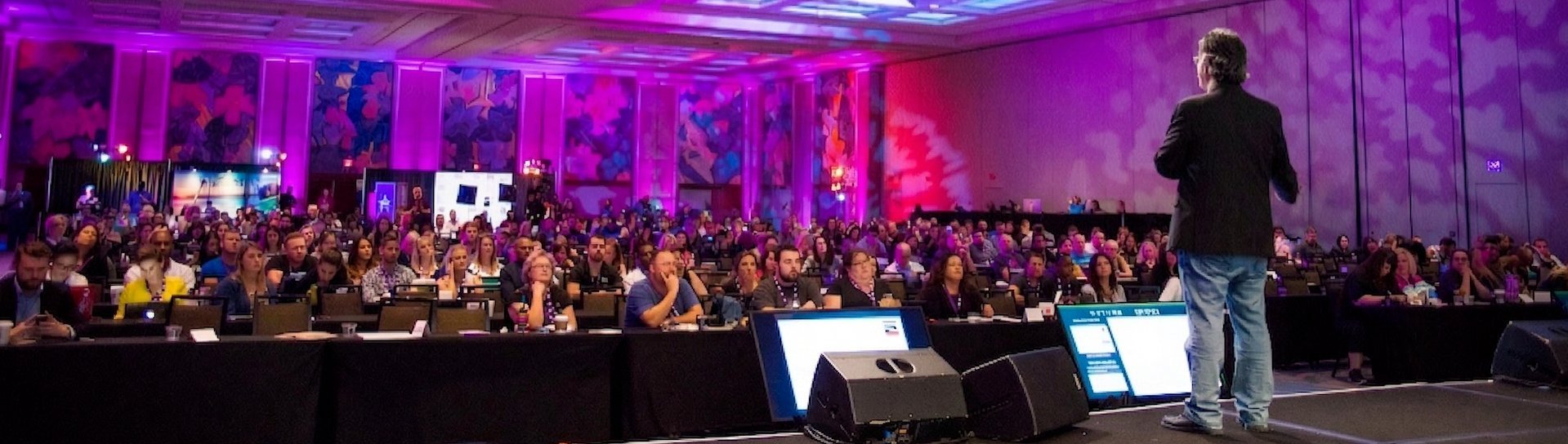
Why Detroit Is Becoming a Hub for AI-Focused Conferences and Events
By Joel Comm | A Trusted Voice in a Noisy Tech World
Detroit's transformation from manufacturing powerhouse to technology innovation hub has accelerated dramatically in recent years. The Motor City now attracts Fortune 500 companies, startups, and academic institutions seeking to leverage artificial intelligence across automotive manufacturing, healthcare technology, financial services, and mobility solutions. This convergence of traditional industry expertise with cutting-edge AI applications creates a compelling backdrop for conferences and corporate events focused on practical AI implementation.
The city's unique position at the intersection of legacy manufacturing and emerging technology creates distinct educational needs. Engineering teams at Ford, General Motors, and Stellantis require AI strategies that integrate with existing production systems. Healthcare administrators at Henry Ford Health System and Detroit Medical Center need frameworks for deploying machine learning in clinical settings. Financial services professionals at Rocket Companies and Ally Financial seek AI solutions for risk management and customer experience optimization.
Detroit's geographic advantages compound these industry-specific factors. The city serves as a natural meeting point for Midwest technology leaders, offering convenient access for professionals from Chicago, Cleveland, Pittsburgh, and Toronto. This positioning makes Detroit an increasingly attractive destination for multi-day conferences where AI keynote speakers can address diverse industry applications within a concentrated professional audience.
Detroit's Conference and Event Ecosystem
The TCF Center anchors Detroit's convention infrastructure with 723,000 square feet of exhibition space and flexible meeting rooms accommodating everything from intimate executive roundtables to major industry conferences. Located downtown along the Detroit River, the venue connects directly to the Renaissance Center and nearby hotels via the Detroit People Mover system.
Cobo Center's successor facility regularly hosts automotive industry conferences like the North American International Auto Show, which increasingly features AI and autonomous vehicle technology sessions. The venue's modular design allows conference planners to configure spaces for different audience sizes and presentation formats, from large keynote presentations to breakout workshops focused on specific AI applications.
The Detroit Marriott at the Renaissance Center provides integrated conference facilities within the General Motors headquarters complex. This proximity to automotive decision-makers makes it particularly valuable for AI conferences targeting manufacturing applications. The hotel's meeting spaces accommodate up to 1,400 attendees across multiple ballrooms and breakout rooms.
Academic venues add intellectual credibility to Detroit's conference landscape. Wayne State University's Mike Ilitch School of Business hosts executive education programs and industry symposiums in state-of-the-art facilities. The University of Michigan-Dearborn campus, with strong automotive engineering connections, provides additional venues for technical conferences combining academic research with industry applications.
Suburban venues like the Suburban Collection Showplace in Novi offer alternative locations for specialized conferences. The facility's automotive heritage and proximity to supplier headquarters in Oakland County make it ideal for AI conferences focused on supply chain optimization and manufacturing automation.
Industries Driving AI Adoption in Detroit
Automotive manufacturing leads Detroit's AI adoption surge. Ford Motor Company has invested billions in AI-driven autonomous vehicle development at its Dearborn campus and Corktown facility. General Motors leverages machine learning for quality control at its Detroit-Hamtramck plant, now renamed Factory Zero, where electric vehicle production relies heavily on AI-optimized manufacturing processes. Stellantis applies artificial intelligence for predictive maintenance across its Warren Truck Assembly and Jefferson North Assembly plants.
These automotive giants require AI education that bridges theoretical concepts with practical implementation challenges. Conference attendees need speakers who understand production line constraints, safety regulations, and union considerations that affect AI deployment in manufacturing environments. The complexity of integrating AI with existing enterprise resource planning systems and quality management protocols creates demand for sophisticated technical presentations.
Healthcare technology represents Detroit's second major AI growth sector. Henry Ford Health System pioneers AI applications in radiology, pathology, and clinical decision support across its network of hospitals and clinics. Detroit Medical Center implements machine learning algorithms for patient flow optimization and resource allocation. The Detroit Wayne Integrated Health Network explores AI solutions for behavioral health and substance abuse treatment programs.
Healthcare AI conferences in Detroit must address regulatory compliance, patient privacy protections, and clinical workflow integration. Medical professionals attend these events seeking practical guidance on Food and Drug Administration approval processes, Health Insurance Portability and Accountability Act compliance, and electronic health record system integration. An AI keynote speaker Detroit healthcare conference must combine technical expertise with deep understanding of medical practice realities.
Financial services technology continues expanding throughout Detroit's downtown corridor. Rocket Companies, headquartered in downtown Detroit, applies AI for mortgage underwriting, fraud detection, and customer experience personalization. Ally Financial leverages machine learning for auto lending decisions and digital banking services. StockX uses artificial intelligence for authentication and marketplace optimization from its downtown Detroit headquarters.
Financial services AI adoption requires speakers who understand regulatory frameworks, risk management protocols, and customer data protection requirements. Conference attendees need education on algorithmic bias prevention, model validation procedures, and regulatory reporting obligations. The intersection of artificial intelligence with consumer lending regulations creates complex compliance challenges requiring specialized expertise.
Mobility and logistics technology emerges as Detroit's fourth significant AI application area. Companies like May Mobility deploy autonomous shuttle services throughout downtown Detroit and surrounding communities. Bosch's Plymouth facility develops AI-powered automotive components and connected vehicle technologies. The Michigan Department of Transportation tests smart infrastructure systems along major corridors connecting Detroit to suburban communities.
What Detroit Audiences Want from an AI Keynote Speaker Detroit Event
Detroit's professional culture combines Midwestern pragmatism with engineering precision. Conference audiences expect speakers who demonstrate real-world AI applications rather than theoretical possibilities. Manufacturing professionals value presentations that address implementation timelines, return on investment calculations, and integration challenges with existing systems.
Technical depth matters significantly in Detroit AI conferences. Automotive engineers and healthcare technologists possess sophisticated backgrounds requiring speakers who can discuss algorithm selection, data preprocessing techniques, and model validation procedures. However, effective presentations must balance technical accuracy with executive-level strategic insights.
Industry-specific case studies resonate strongly with Detroit audiences. A successful AI keynote speaker Detroit conference presentation might include detailed analysis of machine learning applications in stamping operations, predictive maintenance protocols for medical equipment, or fraud detection algorithms in automotive financing. Speakers who reference local companies and regional implementation challenges establish immediate credibility.
Interactive elements enhance presentation effectiveness in Detroit's collaborative professional environment. Question-and-answer sessions, polling, and small group discussions allow attendees to explore specific implementation challenges relevant to their organizations. Workshop-style breakout sessions following keynote presentations enable deeper exploration of technical topics and peer networking opportunities.
Cost justification remains a critical consideration for Detroit audiences. Speakers must articulate clear business cases for AI investments, including productivity improvements, quality enhancements, and competitive advantages. Presentations should address budget allocation strategies, phased implementation approaches, and risk mitigation techniques relevant to established manufacturing and healthcare organizations.
The Detroit Advantage for Conference Planners
Detroit Metropolitan Wayne County Airport provides excellent connectivity with direct flights to major technology hubs including San Francisco, Seattle, Austin, and Boston. The airport's proximity to downtown Detroit via highway connections makes ground transportation efficient for conference attendees. International connections through Air Canada and Delta facilitate participation from Canadian technology professionals, particularly from the Toronto corridor.
Hotel inventory near major conference venues offers competitive pricing compared to coastal technology centers. The Detroit Marriott Renaissance Center, MotorCity Casino Hotel, and Greektown Casino Hotel provide convenient downtown accommodations within walking distance of TCF Center. Suburban options like the Westin Southfield Detroit and Embassy Suites Troy accommodate overflow demand during major conferences.
Seasonal timing considerations favor spring and fall conferences in Detroit. April through June and September through November offer favorable weather conditions and avoid conflicts with automotive industry production schedules. Summer conferences coincide with reduced manufacturing activity but compete with vacation schedules. Winter conferences require careful planning around weather contingencies but offer lower venue and accommodation costs.
Cost advantages make Detroit attractive for multi-day conferences requiring substantial venue space and attendee accommodations. Facility rental rates, catering costs, and hotel pricing typically run 20-30% below comparable venues in Chicago, Boston, or San Francisco. Transportation costs for Midwest attendees favor Detroit's central location.
Walkability between downtown venues enhances the conference experience. The Detroit People Mover connects major hotels, conference facilities, and dining options along a 2.9-mile elevated loop. Riverfront areas provide attractive networking venues, while proximity to Canada offers unique cross-border collaboration opportunities for international conferences.
Detroit's emergence as an AI conference destination reflects the city's successful transition from manufacturing center to technology hub. The concentration of automotive, healthcare, financial services, and mobility companies creates sophisticated audiences seeking practical AI education. Combined with excellent venue infrastructure and cost advantages, these factors position Detroit as an increasingly important location for AI-focused conferences and corporate events.
If you're planning an AI-focused conference or corporate event in Detroit, explore how an ai keynote speaker detroit can transform your next event.
Get Joel’s Free Guide
AI Made Simple for Your Organization, six plain-language principles every leader needs right now. No tech lingo. No hype. Just what actually works.
