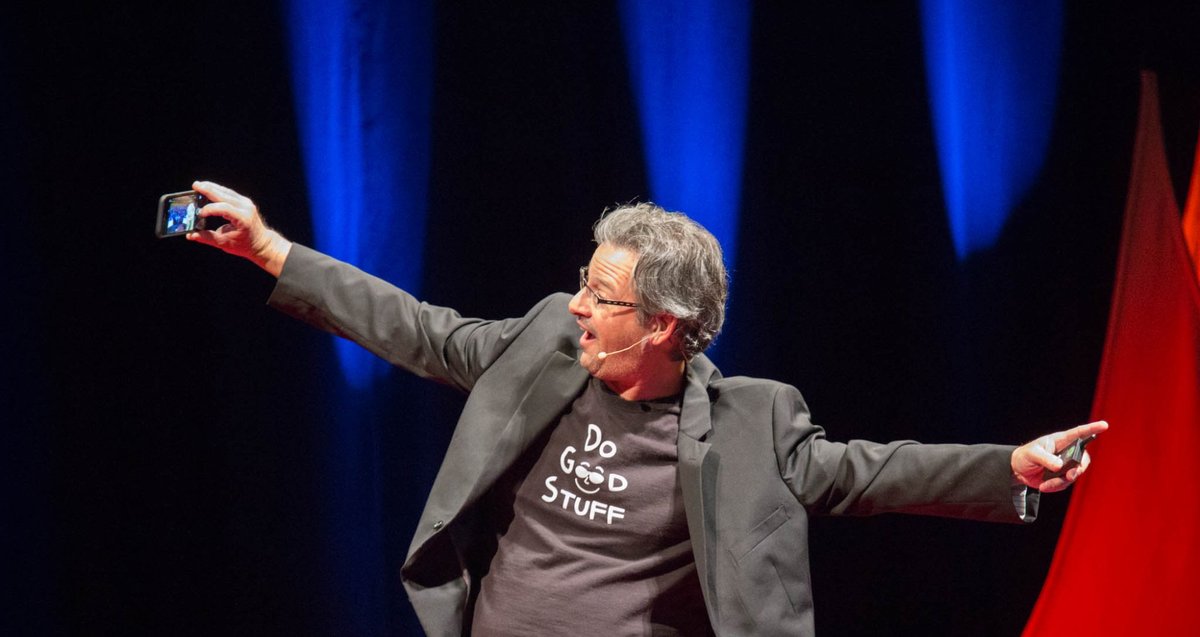
AI Leadership Keynote Speaker — Joel Comm
Why AI Leadership Keynote Speaker Matters for Your Conference
AI leadership isn't about understanding the technology at a technical level. It's about understanding what questions to ask, what risks to manage, what opportunities to prioritize, and how to bring your organization along. The leaders who figure this out become the ones their industries follow. The leaders who don't become the case studies in what went wrong.
What Joel Brings to a AI Leadership Keynote Speaker Keynote
I've been in rooms with leaders at every level for over four decades — from startup founders to Fortune 500 CEOs — and the conversation is always the same at its core: what do I actually need to know, and what do I need to do? My Disruption Confidence Cycle framework was designed for exactly this audience. It gives leaders a strategic model for evaluating AI opportunities, managing AI risks, and building the organizational confidence required for successful adoption. I'm not selling AI. I'm helping leaders lead through it.
Joel has worked with Microsoft, IBM, Cisco, Alibaba, T-Mobile, Twitter, and dozens of other global organizations to help leaders and teams navigate technology with confidence.
What Your Audience Will Walk Away With
- Leaders gain a clear framework for evaluating AI opportunities and threats without needing technical expertise
- Every executive in the room leaves with specific talking points for communicating AI strategy to their teams and boards
- The audience understands the difference between AI hype and AI substance and how to tell which is which
- Leaders build confidence in their ability to guide AI adoption across their organizations
Try It Right Now: The Leadership AI Briefing
Your leadership level. Your biggest AI concern. Executive talking points in 30 seconds.
Select your leadership role and your top AI concern, and the Leadership AI Briefing generates a concise set of executive talking points you can use in your next board meeting, leadership team discussion, or strategic planning session. Not generic bullet points — specific, nuanced positions that reflect the real decisions leaders face. Event planners see this tool and immediately understand how the keynote translates into action leaders take the next day.
Interactive tool loading…
A CEO types in their actual concern about AI, gets talking points they could use in their next board meeting, and realizes this speaker understands the leadership challenge at a level most AI speakers never reach.
Common Concerns
"Our leadership audience is very senior — will they find this too basic?"
Senior leaders don't need basic AI education and they don't need technical deep dives. They need strategic clarity. My leadership keynotes are built around the decisions leaders actually face: where to invest, what to prioritize, how to manage risk, and how to communicate AI strategy to boards, teams, and stakeholders. I've keynoted for audiences where every person in the room had a C-suite title, and the feedback is always the same — finally, someone who speaks to the decisions we actually make.
"We're worried this will feel like a tech talk at a leadership event"
I'm a technology translator, not a technologist on stage. My leadership keynotes are about strategy, people, and organizational change — not about how neural networks function. The technology is the context, not the content. Leaders walk out understanding what AI means for their business, their people, and their competitive position, not how the algorithms work.
"Our leaders come from very different industries — can one talk serve them all?"
The strategic questions AI raises are remarkably consistent across industries: how do we adopt without disrupting operations, how do we manage workforce concerns, how do we evaluate AI investments, and how do we stay ahead of competitors. I address these universal leadership challenges and use cross-industry examples that give every leader in the room something directly applicable. The diversity of the audience is actually an advantage — leaders learn from seeing how AI applies across sectors, not just their own.
Frequently Asked Questions About AI Leadership Keynote Speaker Speaking
What makes Joel's AI leadership keynote different from a general AI talk?
A general AI talk explains the technology. My leadership keynote addresses the decisions, risks, and organizational dynamics that leaders actually face. I cover AI strategy, workforce implications, competitive positioning, and board communication — not how large language models work. It's built for the people who have to lead AI adoption, not just understand it.
Is this appropriate for a board retreat or executive offsite?
Absolutely — these are some of my favorite engagements. The intimate setting allows for more dialogue, and I can tailor the content precisely to the strategic questions your board or leadership team is wrestling with. I often combine a keynote with a facilitated discussion in these settings.
Can Joel moderate a leadership panel on AI in addition to keynoting?
Yes, and I do this frequently. Moderating an AI leadership panel requires someone who can ask smart questions, challenge vague answers, and keep the conversation practical. I bring 45 years of technology context to the conversation, which means I can push panelists past platitudes and into the substance your audience needs.
How does Joel handle audiences that are skeptical about AI?
I welcome skeptics. My approach isn't to sell anyone on AI — it's to help them evaluate it clearly. I address the legitimate concerns, acknowledge the real risks, and give the audience a framework for making informed decisions rather than reactive ones. Skeptics often give me the best feedback because I treat their concerns as valid, not as obstacles to overcome.
Does Joel address AI ethics and responsible AI for leaders?
Yes, and I frame it as a leadership responsibility rather than a compliance checklist. Leaders need to understand the ethical dimensions of AI decisions because those decisions reflect on their organizations and their judgment. I cover this practically, with real examples of how leaders have navigated these issues well and how some haven't.