
What Higher Education Leaders Still Get Wrong About AI
By Joel Comm | A Trusted Voice in a Noisy Tech World
After 46 years in tech, I know this: higher education isn’t special when it comes to AI disruption.
I’ve watched leaders across every sector make the same mistakes that executives made during the internet revolution, the mobile revolution, and the cloud revolution. The patterns repeat because human nature doesn’t change, even when technology does.
The irony isn’t lost on me. The institutions dedicated to learning and adaptation often struggle the most when it’s time to actually adapt.
The misconceptions I keep hearing from university administrators about AI in higher education are the same ones that held back other industries during previous technology waves.
Let me be your guide through what’s really happening. Because I’ve seen this movie before.
Misconception 1: AI is Coming for Higher Education Jobs (The Real Story)
This is the big one. The fear that keeps administrators up at night and dominates board meetings.
I get it. The first question from a provost is almost always about job displacement. “How many faculty positions will we lose to AI in the next five years?”
Wrong question entirely.
Here’s what four decades of watching technology revolutions has taught me: technology doesn’t eliminate jobs, it eliminates tasks. The jobs that disappear are the ones where people refuse to evolve their skill sets.
Think about desktop publishing in the 1990s. Print shops panicked. “This will kill our industry!” Some shops did close. The smart ones learned the new tools and expanded their services.
They went from just printing to design, digital marketing, and web services. Same story with travel agents, bank tellers, and newsroom researchers. The function evolved. The professionals who evolved with it thrived.
Higher education is experiencing the same pattern. AI won’t replace professors who teach critical thinking, mentorship, and complex problem solving. But it might replace administrators who refuse to use it for routine data entry and report generation.
The universities getting this right are asking different questions: “How can AI free up our faculty to focus on higher-value activities?” and “What new roles might emerge that we haven’t thought of yet?”
The transformation happening isn’t about replacement. It’s about augmentation. Your faculty becomes more effective when AI handles the routine tasks they never wanted to do anyway.
Misconception 2: You Need to Understand AI Before You Can Use It
This one drives me crazy because it’s so backwards.
University leadership teams keep telling me: “We need to fully understand the technology before we can implement it responsibly.”
No, you don’t. You need to understand the outcomes you want and start experimenting with tools that can deliver them.
Think about this logically. Do you understand the internal combustion engine?
Probably not in detail. But you drive a car every day. Do you understand cloud computing infrastructure?
Unlikely. But you use cloud-based email, storage, and applications without hesitation.
This is exactly where the Disruption Confidence Cycle™ comes in. I’ve watched it play out across every technology wave since 1980, and higher education is no different. Here are the five stages:
1.
Disruption, A new technology arrives and forces a real change in how the industry works. ChatGPT didn’t ask permission. It showed up in your students’ browsers and your faculty’s research workflow. The status quo of “we’ll evaluate this in next year’s strategic planning cycle” is gone.
2.
Doubt, Leaders question whether the change is real, whether their team can handle it, and whether to act now or wait. This is where most universities are stuck right now. Anxiety and paralysis dominate. Committees form. Reports get commissioned. Nothing ships.
3.
Clarity, The fog lifts. Leaders see which use cases matter (administrative automation, research support, advising augmentation) and which to ignore (replacing the human relationships that define a university education). Decisions become possible.
4.
Confidence, Teams begin to operate with AI as a regular tool. Faculty use it for literature reviews. Admissions uses it to triage applications. Skepticism is replaced by competence and demonstrated results.
5.
Momentum, The institution compounds early wins into durable advantage. AI becomes a multiplier on what your faculty and staff already do well. Other universities start asking how you did it.
Most universities are stuck in Doubt because leaders think they need to skip to Confidence without ever passing through Clarity. You can’t.
Start with problems, not technology. What takes too much time in your organization?
What frustrates your faculty or students?
What processes could be streamlined?
The beauty of modern AI tools is their accessibility. Most are designed for non-technical users. You can test, evaluate, and implement without needing a computer science degree.
Misconception 3: Your Industry is Different (It’s Not, Here’s Why)
This is the most dangerous misconception because it creates artificial barriers to progress.
“But Joel, higher education is different. We have tenure, accreditation requirements, and complex stakeholder relationships. We can’t move as fast as the private sector.”
I’ve heard variations of this from every industry over the past four decades. Healthcare executives said patient privacy made them different. Financial services pointed to regulatory compliance. Manufacturing cited safety standards.
They were all wrong. And so are you.
Look at banking. When ATMs rolled out in the 1970s and 80s, bank executives swore customers would never trust a machine with their money. When online banking arrived in the late 1990s, the same executives said regulation made it impossible.
Today, most people haven’t walked into a branch in months. The regulations didn’t disappear. The banks that figured out how to operate within them won.
Every industry has constraints. Every organization has stakeholders and compliance requirements. What separates successful organizations from struggling ones isn’t the presence or absence of constraints. It’s how creatively they work within those constraints.
Your constraints are features, not bugs. They force you to think more carefully about implementation, which often leads to better outcomes.
The smart approach is creating AI pilot programs within existing compliance frameworks. Instead of waiting for permission to experiment broadly, identify low-risk use cases where current policies already provide coverage. Research literature reviews.
Administrative task automation. Draft content creation. All within existing guidelines for academic integrity and data privacy.
Here’s what I’ve learned from watching organizations in heavily regulated industries: the key isn’t moving fast and breaking things. It’s moving thoughtfully and building things.
Your accreditation requirements can actually help guide AI implementation. Your faculty governance structure provides built-in feedback loops for testing new approaches. Your academic calendar gives you natural pilot periods and evaluation cycles.
Use your industry’s characteristics as implementation guides, not excuses for inaction.
What Actually Works in Higher Education
The patterns that work in higher education aren’t mysterious. They mirror what’s worked in every other sector that’s already moved through the Disruption Confidence Cycle.
Start with administrative efficiency, not academic disruption. The institutions seeing quick wins focus first on behind-the-scenes operations: admissions processing, student inquiry responses, scheduling optimization, and report generation. The “What are your hours?” and “Where do I find my transcript?” questions that consume staff time are perfect AI use cases. Free your advisors to handle the complex student needs that actually require human judgment.
Create faculty AI champions, don’t mandate adoption. The most effective approach involves identifying early adopters among faculty and supporting their experimentation. These champions become internal advocates who speak the language of their colleagues. Mandates from administration build resistance. Peer demonstrations build adoption.
Focus on transparency, not restriction. Instead of creating policies that ban AI use, create guidelines that encourage transparent experimentation. Faculty and students can use AI tools, but must disclose when and how they’re used. This approach builds trust while maintaining academic integrity. Restrictive policies just drive usage underground, where you have no visibility and no influence.
Think conference planning and event management. Higher education runs on events: conferences, seminars, graduation ceremonies, alumni gatherings. AI tools can transform this entire operation, from speaker matching to attendee engagement to post-event analysis. The tools exist today and require minimal technical knowledge.
The Implementation Reality Check
Here’s what I wish more higher education leaders understood: perfect implementation doesn’t exist, but effective implementation is achievable right now.
The universities that succeed don’t wait for perfect solutions or complete staff training. They identify specific use cases, test tools, measure results, and iterate.
Think about the small liberal arts college convinced they can’t compete with larger institutions in AI adoption. Limited IT budget. Stretched staff. Skeptical faculty. Sound familiar?
Start simple. Admissions tests AI tools for initial application triage. The registrar experiments with automated degree audit drafts. Marketing uses AI for social media content.
Six months later, you’ve freed up meaningful staff hours across three departments without major budget increases, new hires, or system overhauls. That’s how Doubt turns into Clarity, and Clarity turns into Confidence.
The biggest mistake isn’t choosing the wrong AI tool. It’s waiting for the right moment to start.
What This Means for Your Leadership Team
I’ve been watching technology adoption patterns since before the World Wide Web existed. The organizations that thrive during technological disruption share common characteristics: they start before they feel ready, they learn by doing, and they treat early mistakes as data, not failures.
Higher education has unique advantages in AI adoption that other industries lack. You have built-in research capabilities, academic freedom to experiment, and access to some of the brightest minds in the world. You also have something most corporations lack: a mission that transcends profit.
The question isn’t whether AI will transform higher education. It already is. The question is whether your institution will help shape that transformation or react to changes driven by others.
When I speak to university audiences about AI adoption, the observation I leave them with is this: the institutions that will thrive in the next decade aren’t necessarily the ones with the biggest budgets or the most advanced technology infrastructure.
They’re the ones with leaders who understand that adaptation requires action, not just analysis.
Your Next Move This Week
Here’s your homework, and I mean this seriously. In your next leadership meeting, ask this question:
“What’s one process in our organization that frustrates people and could potentially be improved with AI tools?”
Don’t ask about strategy. Don’t ask about long-term planning. Don’t ask about budget implications or policy changes.
Ask about frustration. Because frustration points to opportunity.
Then pick one frustration and spend 30 minutes researching AI tools that might address it. Not to implement immediately, but to understand what’s possible with current technology.
You’ll be surprised how much clarity emerges from this simple exercise. And you might discover that the barrier to AI adoption isn’t technical complexity or budget constraints.
It’s simply taking the first step.
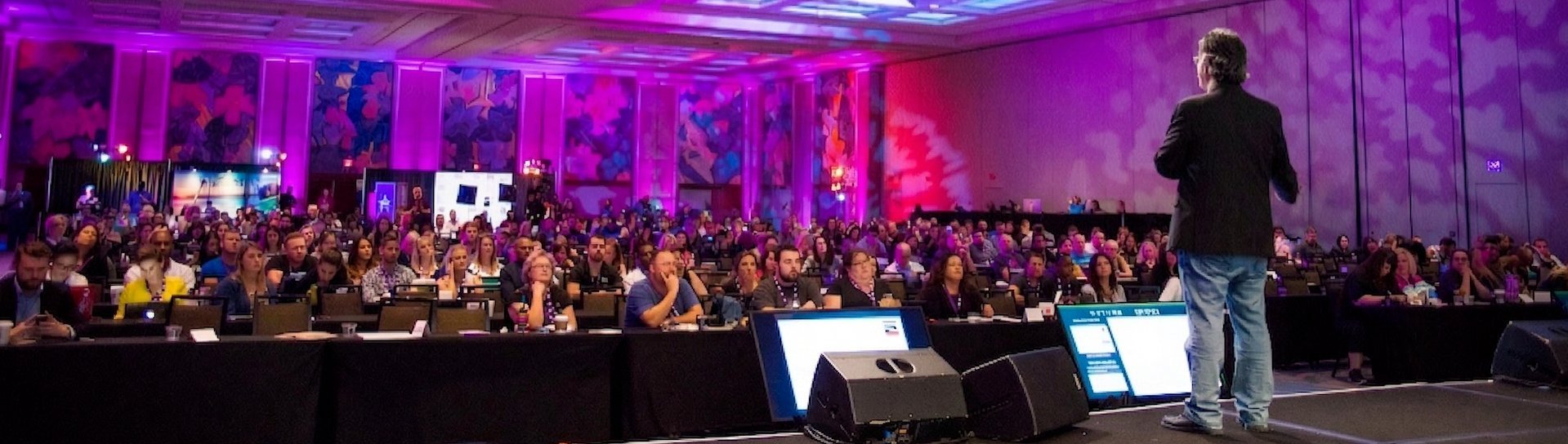
If you’re planning a higher education conference, leadership retreat, or board summit and you want a trusted voice to walk your audience through the Disruption Confidence Cycle™, from Disruption through Momentum, I’m available to keynote.
Bring me in, and let’s get your institution unstuck from Doubt and moving toward Clarity.
Book Joel for Your Higher Education Event
Joel delivers AI keynotes customized for higher education audiences. From intimate boardroom sessions to 5,000-seat arenas.
Check Availability →