
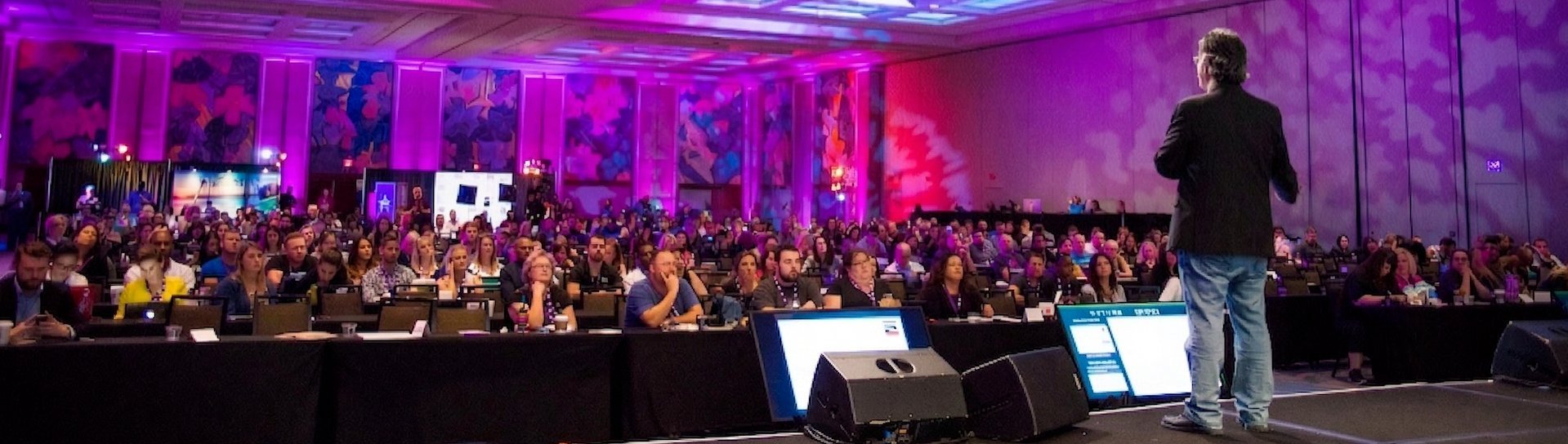
AI Keynote Speaker for Biotech
Biotech companies are racing to bring therapies to market faster, and AI promises to accelerate everything from target identification to clinical design — but most teams don't know how to separate genuine AI breakthroughs from vendor hype, and the cost of betting wrong is measured in years and billions.

What's Happening in Biotech Right Now
Biotech is in a unique position with AI. The industry has used computational tools for decades, but generative AI represents a fundamentally different kind of capability — one that affects every scientist, not just the computational specialists. Drug development still takes over a decade on average. Clinical failure rates remain stubbornly high. And the cost of bringing a single therapy to market keeps climbing. AI won't solve all of that overnight, but it's already compressing timelines in literature analysis, target identification, and clinical trial design. The biotech companies that build AI literacy across their teams — not just in their bioinformatics departments — will have a meaningful competitive advantage.
Biotech Professionals are feeling the pressure from multiple directions:
- Research teams spending weeks on literature reviews that AI could condense into hours
- Grant applications requiring extensive manual writing and formatting that pulls scientists away from the bench
- Experimental data analysis bottlenecks that slow down decision-making at critical development milestones
- Investor and board communications requiring scientists to translate complex data into business language
- Regulatory documentation that demands thousands of hours of manual preparation for each submission
- Competitive intelligence gathering that's always reactive instead of proactive
What Joel Brings to Your Biotech Event

A customized session where Joel translates the AI landscape into practical reality for biotech professionals. He doesn't pretend to know their science — he brings 45 years of watching technology disrupt industries and his Disruption Confidence Cycle™ framework to help teams separate AI signal from noise.
I'm not a scientist. Your audience has PhDs and MDs and they'll see through anyone who pretends otherwise. What I bring is 45 years of watching technology transform industries — and the pattern is always the same. The early hype oversells, the reality undersells, and the real winners figure out the practical middle ground. I customize every talk for the audience, so your biotech professionals will see AI applied to their specific workflow challenges. And I'm honest about what AI can and can't do — which is exactly what a room full of scientists respects.
Try It Right Now: The Research Abstract Translator
One paper. Three audiences. Thirty seconds.
Paste a research abstract and get three versions: a technical summary for peer scientists, a business-language version for investors and executives, and a plain-English version for non-specialist stakeholders.
Interactive tool loading…
Scientists spend hours translating their work for different audiences. This tool does it in seconds, and each version reads like it was written by someone who understands what that specific audience needs to hear. The investor version alone is worth the visit.
Get Joel's Free Guide
AI Made Simple for Your Organization — six plain-language principles every leader needs right now. No tech lingo. No hype. Just what actually works.

What Your Audience Will Walk Away Knowing
Research teams understand how AI tools accelerate literature analysis and experimental design without replacing scientific intuition
Leaders gain clarity on which AI investments deliver real ROI versus which ones are expensive distractions
Teams build confidence evaluating AI vendors and tools through a proven framework designed for high-stakes industries
Who This Is For
If you're planning a conference, summit, or training program for Biotech Professionals, this session is built specifically for your audience. Joel speaks directly to Association executives and conference organizers and Research scientists, biotech executives, lab directors, business development leaders — the people in the room, not a generic tech crowd.

Whether you're an Executive Director shaping your organization's future, a Conference Program Chair building a lineup that delivers real value, or a VP of Research navigating the intersection of science and AI, you know that the right speaker can shift how your entire audience thinks about what's possible.
Joel has delivered keynotes and training for Microsoft, IBM, Cisco, T-Mobile, Twitter, Alibaba, Renault, Enel Energy, the United Nations, the American Marketing Association, Tony Robbins Wealth Mastery and Business Mastery events, and hundreds of other corporate events and industry conferences worldwide.
Joel also delivers tailored AI keynotes for CEOs, executive teams, HR leaders, sales teams, IT leaders, and operations leaders.
Speaking Formats for Biotech Events
Keynote
A high-energy session for your full audience. Clear, practical AI overview customized for Biotech Professionals. 45-90 minutes.
Half-Day Workshop
Smaller groups work hands-on with AI tools relevant to Biotech. Attendees leave with specific workflows. 3-4 hours.
Full-Day Training
Deep immersion covering AI strategy, tools, and implementation specific to Biotech. Custom-built for your team.
Virtual
Same energy, same practical content, delivered remotely.
See Joel in Action
Common Concerns
"Our science is too specialized — a generalist AI speaker won't understand what we do"
You're right — I won't understand your science the way your researchers do. And I'll tell them that upfront. What I bring is something different: 45 years of watching technology transform industries, a framework for evaluating AI tools honestly, and the ability to make complex technology understandable. I customize every talk, so your audience sees AI applied to their context — but I'm not pretending to be a biotech expert.

"We're already using computational tools — how is this different?"
Computational biology has been around for decades. What's changed is that generative AI has made it possible for any researcher — not just the computational specialists — to use AI in their daily work. I help your audience understand that shift and what it means practically.
"Our people are PhDs and MDs — they'll see through anything surface-level"
That's exactly why they respond well to my approach. I don't do surface-level, and I don't pretend to know their field. I show real tools, real limitations, and an honest framework for evaluation. Scientists appreciate someone who says 'here's what I know and here's what I don't.'
"We need someone who understands the funding and timeline pressures unique to biotech"
I've spoken to hundreds of industries, each with their own version of this pressure — regulatory timelines, funding cycles, high-stakes decision-making. I research your audience's specific context before every talk and customize accordingly. But I'm honest that I'm bringing a technology perspective, not an industry perspective.
Frequently Asked Questions About AI Speaking for Biotech
Is this talk appropriate for PhD-level scientists or just business teams?
Both, and scientists are often the most engaged. They immediately see how AI handles the tedious parts of their work — literature reviews, data summarization, grant writing. They leave with practical tools they can use the next day, not buzzwords.
Will Joel address the difference between traditional computational biology and generative AI?
Yes. I make the distinction clear because your audience already knows computational tools. What's new is that generative AI puts powerful capabilities in the hands of every researcher, not just the bioinformatics specialists. That shift is what this talk is about.
How is this different from a vendor demo of an AI drug discovery platform?
I don't sell software and I don't represent any platform. I show your audience the full landscape — what's working, what's overpromised, and what's worth evaluating. That independence is why planners trust me with their stage.
Can Joel customize for our specific focus — oncology, gene therapy, diagnostics, or medical devices?
Every time. A talk for gene therapy researchers looks very different from one for diagnostics companies or medical device developers. I customize the examples, demos, and pain points for your specific audience.
Our audience includes both early-stage startups and established companies. Does that work?
That's actually an ideal mix. Startups need to use AI to punch above their weight with limited resources. Established companies need to integrate AI without disrupting proven workflows. I address both perspectives because the underlying principles are the same even when the applications differ.
More Resources for Biotech Event Planners
AI Tools Biotech Researchers Are Actually Using Right Now
The biotech world has used computational tools for decades. But generative AI is a different animal — it puts powerful capabilities in the hands of every researcher, not just the bioinformatics team. Here are the tools that are actually getting used in labs and offices right now.
What to Expect from an AI Keynote at Your Biotech Conference
Your biotech audience includes PhDs who can spot a surface-level talk in the first three minutes. The right AI keynote doesn't dumb anything down — it brings cross-industry perspective and live demos that make even seasoned researchers rethink how they work.
Will AI Replace Biotech Researchers? The Honest Answer
AI can analyze a million papers in the time it takes to read one abstract. That sounds scary if you're a researcher. But scientific intuition, experimental design, and the judgment to know when data is telling you something new — that's not going anywhere.
AI for Research Analysis: What Biotech Professionals Need to Know
Literature reviews that took a team three months now take three days. Grant application drafts that consumed weekends now get a solid first pass in an hour. AI is transforming how biotech professionals handle research analysis — and the teams that ignore it are falling behind.
How Biotech Associations Can Address AI at Their Annual Conference
Your members are scientists. They respect evidence, not hype. When your association brings in an AI speaker, that person needs to be honest about limitations, specific about applications, and independent of any vendor agenda. That combination is rarer than you think.