

What to Expect from an AI Keynote at Your Commercial Real Estate Conference
By Joel Comm | A Trusted Voice in a Noisy Tech World
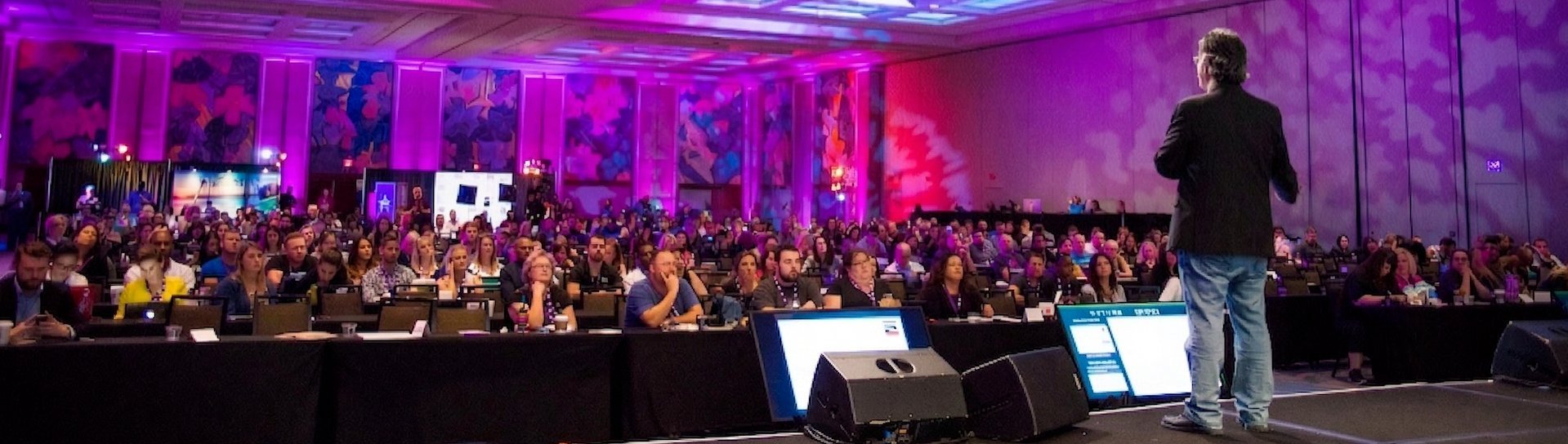
As a New York Times bestselling author who has spoken at events across four decades in technology, I’ve watched countless industries grapple with transformative change. Commercial real estate is now facing its own AI disruption moment, and conference organizers are scrambling to help attendees understand what’s coming. The key is moving beyond AI fear to practical adoption strategies. Here’s what your audience needs from an effective AI keynote, viewed through my Disruption Confidence Cycle framework.
Your members are already hearing about AI from vendors trying to sell them something. Here's how to give them a session that actually helps them evaluate what's real.
The commercial real estate industry has a vendor problem. Every software company that ever touched a spreadsheet has slapped "AI-powered" on their pitch deck. Your conference attendees are drowning in demos that promise everything and explain nothing about how AI actually works in their daily workflows.
An effective AI keynote cuts through this noise. It shows real applications, real results, and real limitations. It arms your audience with the knowledge they need to separate legitimate tools from expensive experiments.
What Your Audience Actually Needs to Hear
Skip the "AI will change everything" sermon. Your members know change is coming. They want specifics.
Start with the workflows that are eating their teams alive. Lease abstraction that takes 6-8 hours per transaction. Market comp analysis that requires pulling data from five different platforms. Investment memos that consume analyst time for days while deals move at deal speed.
Show them AI tools that address these exact pain points. A lease abstraction platform that pulls key terms, escalation clauses, and renewal options from a 40-page document in under 10 minutes. Market comp tools that aggregate comparable sales and vacancy data across multiple sources and generate summary reports ready for client presentations.
Real examples work better than theoretical possibilities. Walk through an actual lease abstract generated by AI. Show the before and after of an investment memo process. Let them see the time savings in concrete terms.
Focus on Production-Ready Applications
Your keynote should distinguish between AI tools that work today and AI promises that might work someday. Commercial real estate has several categories where AI is already delivering measurable results.
Document processing leads the pack. AI can read lease agreements, extract critical dates and financial terms, and organize them into standardized formats. Property condition reports benefit from AI drafting that turns inspection notes into professional, lender-ready documents. Investment memo preparation gets streamlined when AI handles first drafts of deal economics and market context.
Communication at scale represents another proven application. AI-generated tenant correspondence templates maintain professionalism across large portfolios. Client communication benefits from AI tools that translate complex cap rate and valuation models into language that makes sense to non-finance audiences.
Data synthesis and analysis round out the current capabilities. AI tools can aggregate market data from multiple sources, identify trends, and generate summary reports that would otherwise require hours of manual analysis.
Address the Implementation Reality
Theory doesn't help anyone. Your audience needs to understand what implementing these tools actually looks like.
Most firms start with one specific workflow rather than attempting wholesale transformation. A brokerage might begin with lease abstraction for their largest clients, then expand to other document types as they build confidence with the technology.
Integration matters more than features. The best AI tools plug into existing software stacks rather than requiring complete workflow overhauls. Show examples of AI platforms that work with current CRM systems, document management platforms, and financial modeling tools.
Training requirements vary significantly between tools. Some AI applications require weeks of setup and team training. Others work effectively with minimal onboarding. Help your audience understand these differences so they can plan implementation timelines realistically.
Give Them Evaluation Criteria
Vendors will claim their AI can do everything. Your keynote should provide a framework for separating substance from marketing.
Accuracy benchmarks matter most. AI tools should demonstrate consistent performance on the specific document types and data sources your audience uses regularly. A lease abstraction tool that works perfectly on retail leases but struggles with industrial agreements isn't universally valuable.
Speed improvements need context. AI that reduces lease abstraction from 6 hours to 45 minutes delivers clear value. AI that reduces a 15-minute task to 10 minutes probably isn't worth the implementation effort.
Cost structures affect adoption timelines. Some AI tools charge per document processed. Others require monthly subscriptions regardless of usage volume. Still others demand percentage fees on completed transactions. Help your audience understand how these models align with different business structures.
Human oversight requirements determine practical usability. AI that generates accurate first drafts but requires extensive review offers different value than AI that produces client-ready deliverables. Both have their place, but buyers need to understand the difference.
Your members face increasing pressure to move faster while maintaining quality. AI keynotes that focus on practical applications, real limitations, and clear evaluation criteria help them make informed decisions about tools that can genuinely accelerate their work. This is exactly what Joel addresses in his Future of Work keynote — helping teams navigate AI adoption without the overwhelm.








Get the Free Guide
AI Made Simple for Your Organization — six plain-language principles every leader needs right now. No tech background required.

Industry Resources
AI Is Reshaping Other Industries Too
- What to Expect from an AI Keynote at Your Architecture Conference
- What to Expect from an AI Keynote at Your Civil Engineering Conference
Related Reading
AI Tools Commercial Real Estate Professionals Are Actually Using Right Now
AI for Lease Abstraction: What CRE Professionals Need to Know
How Commercial Real Estate Associations Can Address AI at Their Next Event
Home > AI Speaker > Commercial Real Estate > What to Expect from an AI Keynote at Your Commercial Real Estate Conference