
The Disruption Confidence Cycle in Association Management
By Joel Comm | A Trusted Voice in a Noisy Tech World
Association management is paralyzed by AI anxiety when it should be pioneering member transformation.
I’ve watched this pattern unfold across every major technology shift in my 46 years in tech, the PC revolution, the internet, mobile, social media, cloud, crypto, and now AI. The cycle is predictable. The names change. The emotional arc doesn’t.
Today, association management sits squarely in what I call the Doubt phase of the Disruption Confidence Cycle™, and that’s exactly where the biggest opportunity hides.
The Doubt Phase: Where Association Management Sits Today
Walk into any association boardroom and you’ll hear the same questions. “Should we use AI for member communications?” “What if we automate something wrong?” “Are we moving too fast?” “Are we moving too slow?”
Those aren’t strategy questions. They’re anxiety questions. And they reveal exactly where association leadership sits on the curve.
Here’s the Disruption Confidence Cycle™ in plain language:
1.
Disruption, A new technology arrives and changes how the work actually gets done. The old playbook stops producing the old results. 2.
Doubt, Leaders question whether the change is real, whether their team can handle it, and whether to act now or wait. Paralysis dominates. 3.
Clarity, The fog lifts. Leaders see which use cases matter, which to ignore, and which questions to ask. Decisions become possible. 4.
Confidence, Teams use the new technology as a regular tool. Skepticism gives way to competence and measurable results. 5.
Momentum, Early wins compound into durable advantage. The technology becomes a multiplier on the organization’s existing strengths.
Association management is in Doubt. Executives know they need to act. They’re afraid of acting wrong. So they consume content, attend webinars, and form committees while taking minimal action on implementation.
The pattern I’ve watched since 1980 is consistent: the organizations that break out of Doubt fastest become the category leaders. The ones waiting for “perfect clarity” get lapped.
What’s Coming Next for Association Management
The next phase is Clarity. This is where association leaders will finally see specific, measurable wins from AI. Based on the pace of every prior tech cycle, we’re roughly 12-18 months from this shift becoming visible across the industry.
Three breakthrough areas will define Clarity for associations:
Member engagement personalization will move beyond demographic segments to individual behavioral prediction. Instead of sending the same monthly newsletter to 10,000 members, associations will deliver content based on career stage, learning preferences, and engagement history. The technology already exists. Most association teams are still debating whether to try it.
Event optimization through predictive analytics will transform conference planning. Anyone who has programmed a large conference knows the truth: session selection is largely guesswork dressed up as expertise. AI can analyze registration patterns, past feedback, and industry signals to forecast attendance with far more accuracy than gut instinct. The associations that adopt this will see real improvements in attendee satisfaction.
Automated member journey mapping will replace the guesswork around lifecycle management. AI can flag the exact moment a member is likely to lapse, suggest the right retention intervention, and draft personalized outreach. This isn’t science fiction. Enterprise customer success teams are already doing it.
Associations experimenting with these capabilities today will enter the Clarity phase with a head start. Those waiting for “industry best practices” will spend the next two years playing catch-up.
Six Technology Revolutions, One Clear Pattern
I’ve been on the front lines of technology disruption since 1980. The patterns repeat.
In the mid-1990s, plenty of association leaders dismissed the internet as a fad that wouldn’t replace face-to-face networking. A few years later, those same organizations were scrambling to register domain names and figure out email.
The early movers had already locked up the best digital real estate and built the strongest online communities.
The social media wave played out identically. In the late 2000s, the prevailing wisdom was that Facebook was “just for college kids” and LinkedIn was “too complicated for our members.” By the early 2010s, associations without a social presence were losing younger members to communities that met people where they already lived online.
Crypto and blockchain delivered the same lesson, just compressed. Trade associations in finance, real estate, and law that engaged the conversation early became trusted educators. The ones that dismissed it lost credibility with their most forward-leaning members.
Each cycle followed the same arc: initial dismissal, then anxiety, then panic, then reluctant adoption, usually after the competitive advantage had already been claimed by someone else.
Here’s what makes AI different: the window between Doubt and widespread adoption is shrinking. We’re not talking about a five-year transition. It’s more like 18-24 months before AI-assisted member experiences become table stakes.
The Questions Association Leaders Must Ask Their Teams
Most association teams are asking the wrong questions about AI. They focus on tools and platforms when they should be focused on member experience and operational drag.
In your next leadership meeting, put these five diagnostic questions on the table:
“What percentage of our member communications are truly personalized versus mass-distributed content with a mail merge?” Most associations will find they’re treating a diverse membership as a homogeneous group. AI can segment and personalize at a scale manual processes can’t touch.
“How many staff hours per week go to repetitive tasks that could be assisted by AI?” Data entry, routine inquiries, basic administrative work. This is where AI delivers the fastest wins.
“What member questions do we answer the same way dozens of times every month?” Those repetitive inquiries are perfect candidates for AI-assisted knowledge bases. Not generic chatbot replies, contextual answers grounded in the member’s actual profile and history.
“How do we currently predict which members are likely to lapse, and how accurate are those predictions?” Most associations rely on gut instinct and lagging indicators like event attendance. AI can analyze dozens of engagement signals to flag lapse risk early enough to do something about it.
“What would happen to conference attendance if we could predict which sessions each attendee actually wants?” This question opens up conversations about personalized schedules, dynamic programming, and curation that can meaningfully lift satisfaction scores.
Teams that can answer these honestly will spot their highest-impact AI opportunities. Teams that deflect will stay stuck in Doubt while competitors move ahead.
Moving from Anxiety to Action: Entering the Confidence Phase
The shift from Doubt to Confidence happens when association leaders stop chasing perfect implementation and start measuring incremental improvement. I’ve watched this play out in every major tech adoption cycle. AI is no different.
The key is starting with AI-assisted processes rather than AI-automated ones. Don’t try to fully automate member communications. Use AI to draft personalized emails that staff review and send. Don’t deploy a complete chatbot.
Use AI to generate first-draft responses to common questions that your team edits before publishing.
Think about the association that picks one narrow use case, say, drafting welcome sequences for new members, and measures it obsessively for 90 days. Response times drop. Messaging gets more consistent. Engagement climbs.
That small win builds the internal confidence to take on a bigger project. Then a bigger one. That’s how Confidence becomes Momentum.
For association management, this means: pick one specific use case with clear metrics. Email open rates. Event registration conversion. Inquiry response time. Implement AI assistance. Measure. Document. Repeat.
The breakthrough moment comes when your team stops saying “we should probably look into AI” and starts saying “AI helped us improve X by Y%.” That’s when you’ve crossed into Confidence.
This shift also changes how you evaluate vendors. You stop hunting for the “best” AI solution and start hunting for the one that solves your specific, measured problem. You stop comparing features and start comparing outcomes.
Once a team experiences a real AI win, the anxiety evaporates. The conversation shifts from defensive (“We don’t want to fall behind”) to offensive (“How do we lead our category?”).
That’s the entry to Momentum, the stage where early wins compound and AI becomes a multiplier on everything your association already does well.
The Competitive Reality Association Leaders Can’t Ignore
Here’s the part that should keep association executives up at night: your members already experience AI-powered personalization everywhere else in their digital lives. Netflix knows what they want to watch. Amazon knows what they want to buy. LinkedIn knows who they should connect with.
Then they log into your association portal and get the same generic experience they had in 2015.
That gap is a credibility problem most boards haven’t named yet. Your members aren’t comparing your digital experience to other associations. They’re comparing it to every consumer service they use. Right now, associations are losing that comparison.
Whoever closes the gap first captures disproportionate loyalty and engagement. Whoever waits will spend years explaining why a “premium membership” delivers a sub-premium digital experience.
This isn’t about chasing trends. It’s about staying relevant to members who expect intelligent, personalized interaction in every other corner of their professional lives.
The Disruption Confidence Cycle™ suggests roughly 18 months before AI-assisted member experiences become the baseline, not the differentiator. Associations that start building now will own real advantage. Those that wait will spend years and far more money trying to catch up.
Your Next Move This Week
Three steps. Do them before next Monday.
1.
Pick one process. Choose the single most repetitive, measurable workflow on your team, onboarding emails, common member inquiries, event reminders, lapse outreach. Just one. 2.
Set a baseline. Write down the current metric. Open rate. Response time. Conversion. Whatever it is, capture the number this week. 3.
Run one AI-assisted experiment for 30 days. Not a full automation. Just AI-drafted, human-reviewed. Measure the same metric at day 30 and decide what to do next.
That’s how you break out of Doubt. Not with a committee. Not with a vendor demo. With one measured experiment.
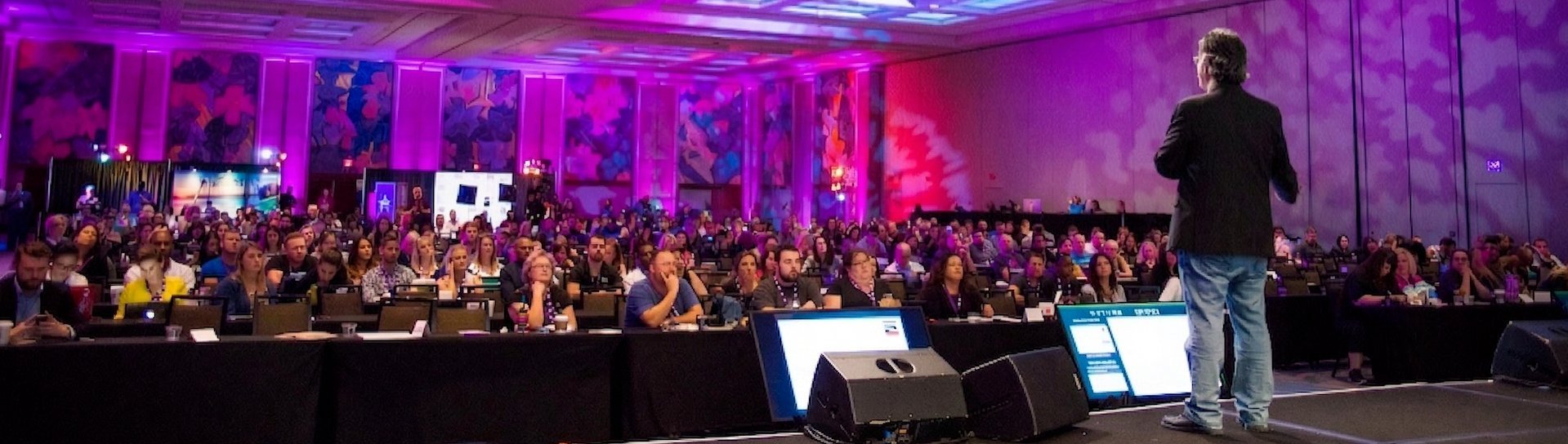
And if you’re planning an association conference or executive retreat where this conversation needs to land with your members. I’m available to keynote events for associations, conferences, and industry leadership summits.
Bring me in to walk your audience through the Disruption Confidence Cycle™ and what it means for the next 18 months of their work.
Book Joel for Your Association Management Event
Joel delivers AI keynotes customized for association management audiences. From intimate boardroom sessions to 5,000-seat arenas.
Check Availability →