

What to Expect from an AI Keynote at Your Manufacturing Conference
By Joel Comm | A Trusted Voice in a Noisy Tech World
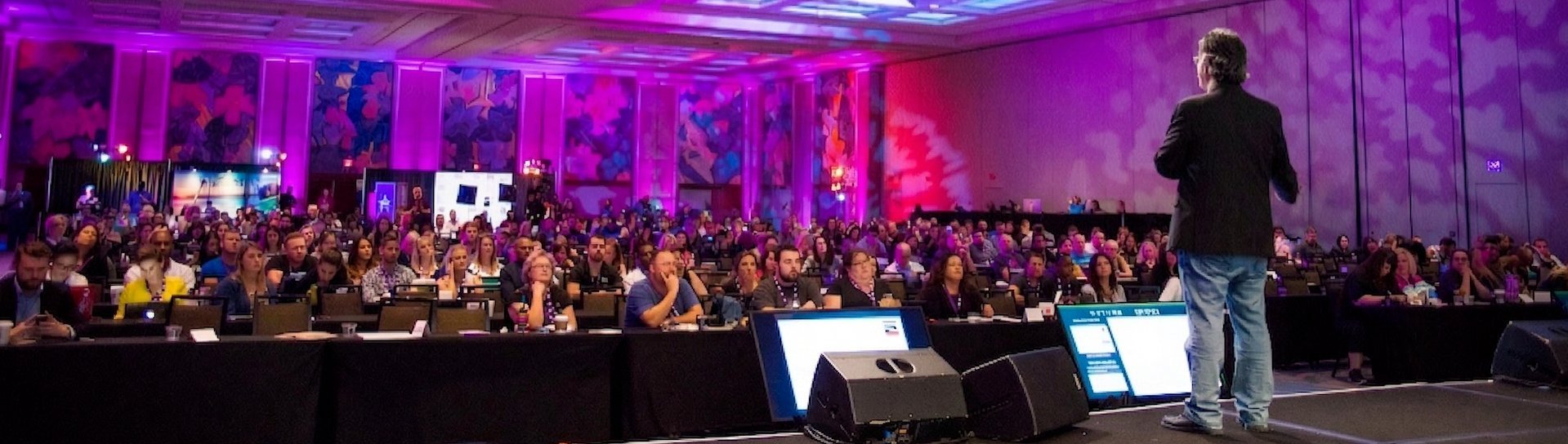
As a New York Times bestselling author who has spoken at events across four decades in technology, I’ve watched manufacturing leaders struggle with AI adoption at countless conferences. The key insight I share: “AI keynotes succeed when they connect theory to your factory floor reality.” Through my Disruption Confidence Cycle framework, I help manufacturing executives move beyond AI buzzwords to practical implementation strategies that actually work.
Your members have seen enough AI headlines to be skeptical — here's how to give them a session that earns their trust and actually changes how they think about the technology.
The problem isn't that manufacturing professionals don't understand AI matters. They get it. The problem is they've heard too many consultants promise moon landings and deliver PowerPoints. They want to see the actual machines, the actual ROI numbers, and the actual problems getting solved on factory floors just like theirs.
An AI keynote that works for manufacturing doesn't start with algorithms. It starts with the 3 AM phone calls about line downtime, the compliance reports eating up entire weekends, and the senior operators walking out the door with decades of knowledge nobody bothered to capture.
Show Them Production Lines Already Running AI
The best manufacturing AI keynotes skip the theoretical stuff entirely. They show video of actual production lines where AI visual inspection catches hairline cracks that trained quality inspectors miss. They walk through real dashboards where predictive maintenance models flagged bearing wear three weeks before a critical conveyor would have seized up during peak season.
These aren't pilot programs or proof-of-concepts. These are production systems processing millions of parts, generating measurable improvements in yield and uptime. The audience needs to see the actual interfaces, the actual alerts, and the actual performance data.
Your keynote speaker should have examples from multiple manufacturing verticals. Automotive stamping operations using AI to optimize press settings in real-time. Electronics assembly lines where machine vision systems adapt inspection parameters based on component variations. Food processing plants where AI scheduling systems balance energy costs, labor constraints, and demand forecasting to minimize waste.
Address the Infrastructure Reality Check
Here's where most AI talks lose manufacturing audiences: they pretend the technology just plugs into whatever systems you're running today. Manufacturing professionals know better. They know their quality control documentation still lives on clipboards and Excel spreadsheets. They know their maintenance management system hasn't been updated since the Clinton administration.
A credible AI keynote acknowledges this gap without making it sound insurmountable. The speaker should walk through actual data infrastructure projects. Show how companies moved from paper-based inspection logs to systems where floor supervisors dictate notes into natural language interfaces that generate formatted compliance reports automatically.
Cover the connectivity piece too. Explain how manufacturers connect legacy equipment to AI systems without ripping out machines that still have years of productive life left. Show actual examples of retrofit sensor installations and edge computing deployments that work with existing PLCs and control systems.
Break Down the Skills and Training Challenge
Your audience knows the workforce problem intimately. Senior operators with irreplaceable knowledge are retiring faster than new hires can learn the job. Traditional training programs can't scale to meet demand, and tribal knowledge disappears every time someone walks out the door.
The keynote should demonstrate AI-powered training systems already working in manufacturing environments. Show personalized learning paths that adapt based on each operator's skill gaps and certification requirements. Walk through knowledge capture tools that convert senior operators' expertise into training modules new hires can access on demand.
Don't just talk about it. Show actual training interfaces. Let the audience see how AI systems guide new operators through complex setup procedures, provide real-time feedback during equipment operation, and track competency development across entire teams.
Present Supply Chain Visibility That Actually Works
Manufacturing professionals are tired of hearing about supply chain "transparency" that stops at tier-one suppliers. They need visibility that extends deep into their supplier networks, catching disruptions before they hit the production floor.
Show them AI systems that monitor supplier financial health, scan logistics networks for bottlenecks, track weather patterns affecting raw material transportation, and aggregate news feeds for geopolitical risks that could impact sourcing. Make it concrete. Walk through actual alerts that helped manufacturers avoid material shortages by switching suppliers weeks before competitors realized there was a problem.
The best examples come with specific numbers. Show how AI-driven demand forecasting reduced inventory carrying costs while improving fill rates. Demonstrate supply chain risk monitoring that quantified potential disruptions in terms of production days and revenue impact.
Focus on Implementation Roadmaps They Can Actually Follow
End with actionable next steps, not inspirational platitudes. Your audience needs to understand how companies similar to theirs moved from AI skepticism to measurable results. Break down the implementation sequence: what gets deployed first, what requires the most infrastructure investment, what delivers ROI fastest.
Show them pilot program frameworks that prove value before requiring major capital investments. Cover change management approaches that work with manufacturing culture, not against it. Give them vendor evaluation criteria that separate legitimate AI capabilities from marketing hype. This is exactly what Joel addresses in his Future of Work keynote — helping teams navigate AI adoption without the overwhelm.










Get the Free Guide
AI Made Simple for Your Organization — six plain-language principles every leader needs right now. No tech background required.

Industry Resources
AI Is Reshaping Other Industries Too
- What to Expect from an AI Keynote at Your Aviation Ground Operations Conference
- What to Expect from an AI Keynote at Your Luxury Manufacturing Conference
Related Reading
AI Tools Manufacturing Operations Teams Are Actually Using Right Now
Will AI Replace Manufacturing Workers? Here's What's Actually Happening
How Manufacturing Associations Can Address AI at Their Annual Conference
Home > AI Speaker > Manufacturing > What to Expect from an AI Keynote at Your Manufacturing Conference